A touchless system for motor reactivation of limbs based on the transformation of movement into sound.
Keyword
City Making, Distributed Production, Hands-on Experimentation, Research
Period
2018-2020
Financed by
Coordinator
Partner
Contribution by
SISCODE is a project funded by the European Community (Horizon 2020) aimed to stimulate the use of co-creation methodologies in RRI (Responsible Research Innovation) and Science and Innovation Policy. Coordinated by the Politecnico di Milano, SISCODE comprises a multidisciplinary consortium of 17 partners from 13 European countries.
Polifactory participated as one of the ten co-creation labs (Fab Lab, Living Lab and Science Museum), i.e. those involved in the design and development of pilot projects aimed at co-creating concrete solutions to design challenges in different fields (from education to healthcare to circularity). From the results of the pilot projects, the consortium developed and released a number of co-creation methodologies: scalable, replicable in other contexts and shared with policymakers and citizens.
The multidisciplinary team of researchers of Polifactory research group explored the potential of co-design and user innovation (innovation-led and produced by the user) in the field of health and wellbeing, in collaboration with FightTheStroke (FDS). This social promotion association supports families and caregivers in the daily challenges that girls and children affected by stroke and cerebral palsy have to face.
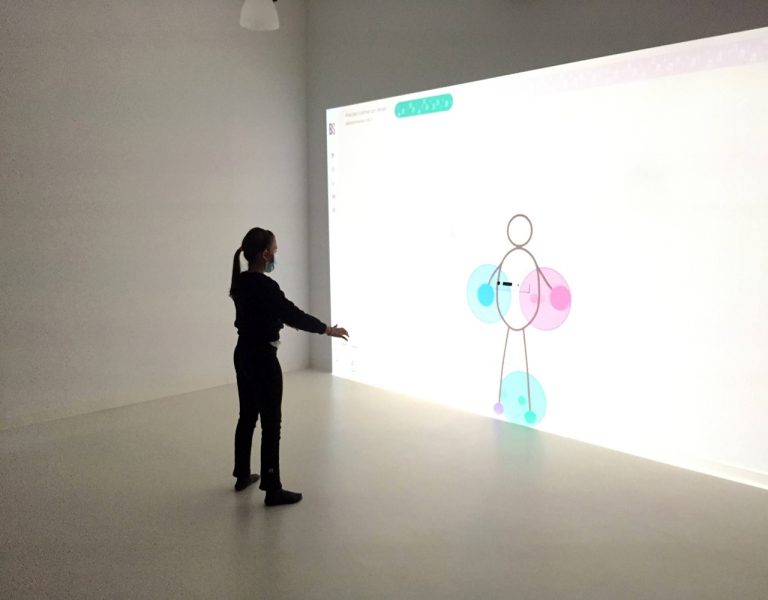
The result of the pilot developed by Polifactory is BODYSOUND, a video game platform for motor reactivation exercises through music and play, aimed at everyone but in particular at children with motor difficulties.

Video credits: LAB Immagine – Department of Design, Politecnico di Milano
BODYSOUND system
BODYSOUND is a pilot project that investigates the physical-motor needs of children diagnosed with cerebral palsy. It explores them based on proprioception principles, specifically focusing on translating movement into sound stimuli.
The BODYSOUND rehabilitation system was designed as part of a co-creation process involving children and families from the FightTheStroke association, therapists, sports doctors and policymakers.
The BODYSOUND rehabilitation system was designed as part of a co-creation process involving children and families from the FightTheStroke association, therapists, sports doctors and policymakers.
The game is based on a system of sound and visual movement guides that the child, through his or her avatar, must follow to create a melody, collect points and access new levels of play. The child will be able to choose different categories of workouts that differ in the type of movements (warm-up, technical gestures, relaxation) and overall play experience (colours and melodies) to be carried out at the centre in the presence of the specialist or at home.
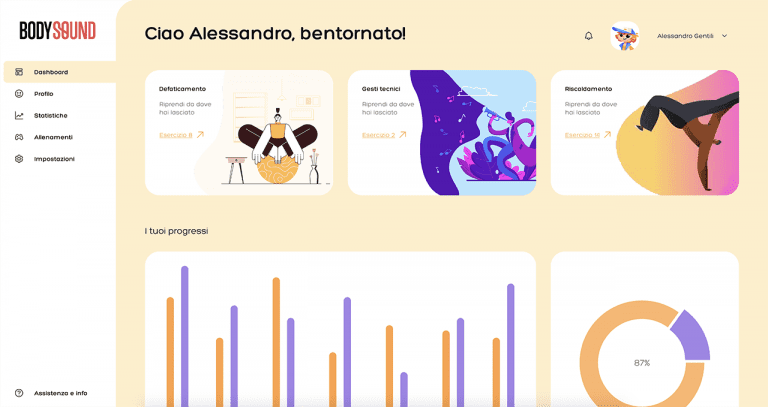
Homepage of the BODYSOUND system
Image credits: Polifactory
The BODYSOUND training system can support the development of basic motor patterns, and the acquisition of body awareness, support the development of coordination and balance, and contribute to visual-motor coordination. But it can also enable the child to acquire specialised motor gestures (technical gestures) that belong to specific sports disciplines, support motor strengthening, and support the ability to interpret rhythm.
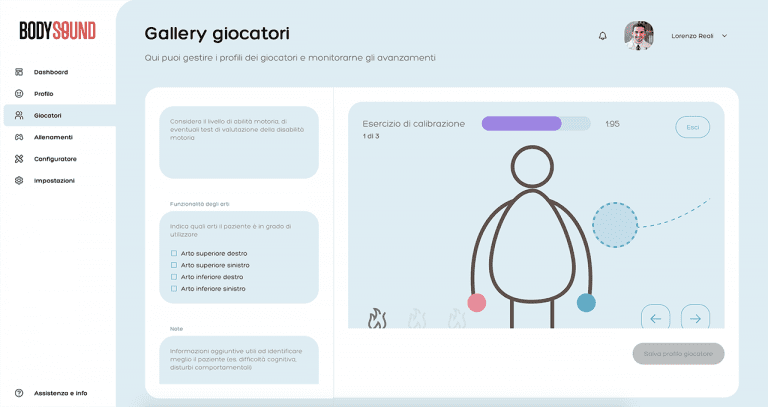
Therapist dashboard
Image credits: Polifactory
The most innovative feature of BODYSOUND is the role it has been designed for motor rehabilitation specialists. A central role because it will be the specialist who, thanks to BODYSOUND, will be able to record the exercises that the system will “translate” into play and that will be usable by patients directly from home, in continuity with the exercises performed during rehabilitation sessions, thus making the system customisable and adaptive. The specialist will be able to record the different movements and exercises. At the same time, the child will be able to play freely, thanks to the system adapting to the individual’s movement possibilities.
In fact, BODYSOUND’s software, through a body-tracking system, can calibrate the exercises based on the user’s mobility, but also monitor motor praxis and coordination, training times and frequency, record and compare the precision and speed of execution of movements, thus enabling the identification of a fully customised therapeutic and capacitation pathway.
The BODYSOUND system is multi-platform: there is a WEB version, aimed at home training, which can be used through a device with an internet connection equipped with a webcam (PC or tablet) and a PRO version aimed at training to be carried out in gyms, centres, schools. The latter integrates everything necessary to set up a space dedicated to the activity to make it usable for several users, allows you to upload customised movement sequences converted into exercise/game models and is aimed at specialists in the medical, health and sports fields.
The Multi-Stakeholder Co-creation Process
The Responsible Research Innovation process that led to the development of BODYSOUND involved several stakeholders. In the first instance, parents belonging to the FightTheStroke Association, through a survey, supported the researchers in identifying the needs of children with cerebral palsy and their families with respect to rehabilitation contexts and tools.
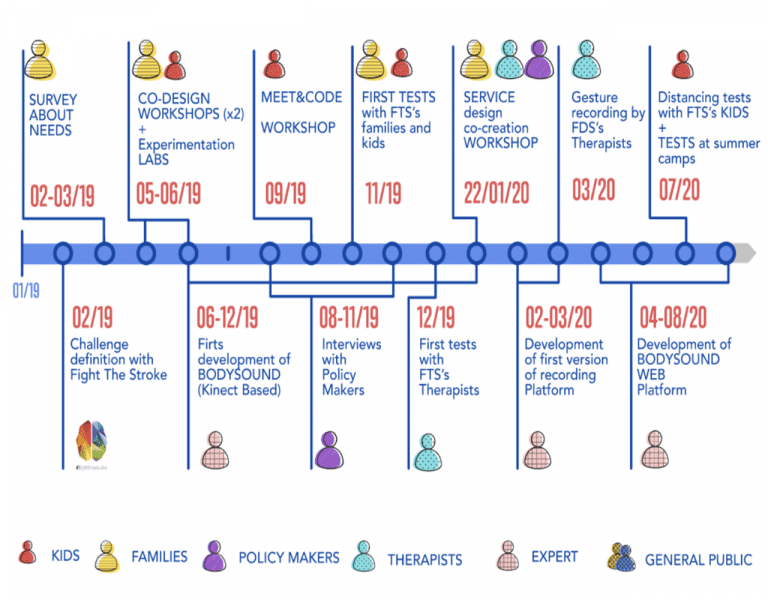
Stakeholder engagement steps in the Bodysound co-creation process
Image credits: Polifactory
Secondly, the children of the Association were the protagonists of the co-design activities: the researchers involved them in some Experimentation Labs aimed at understanding the physical value of sound by exploring interaction with haptic, tactile and touchless technologies.
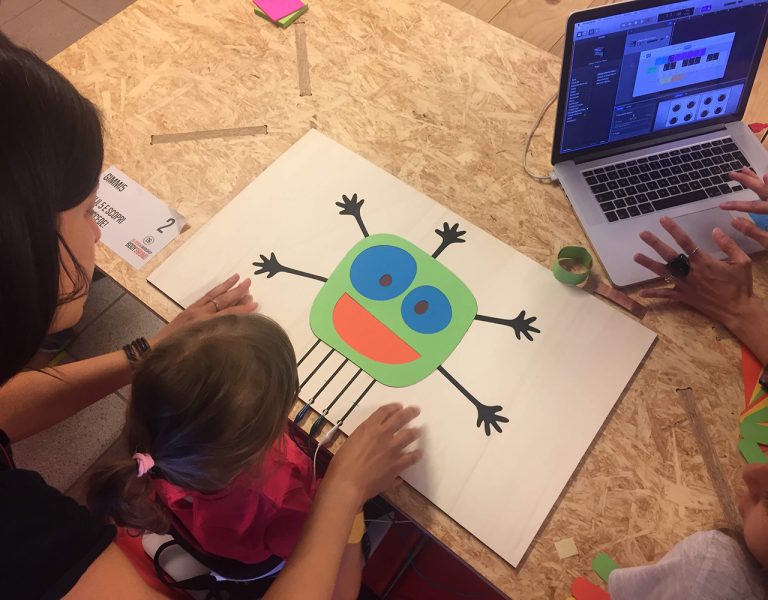
Experimentation Lab: producing sounds by touch
Photo credits: Polifactory
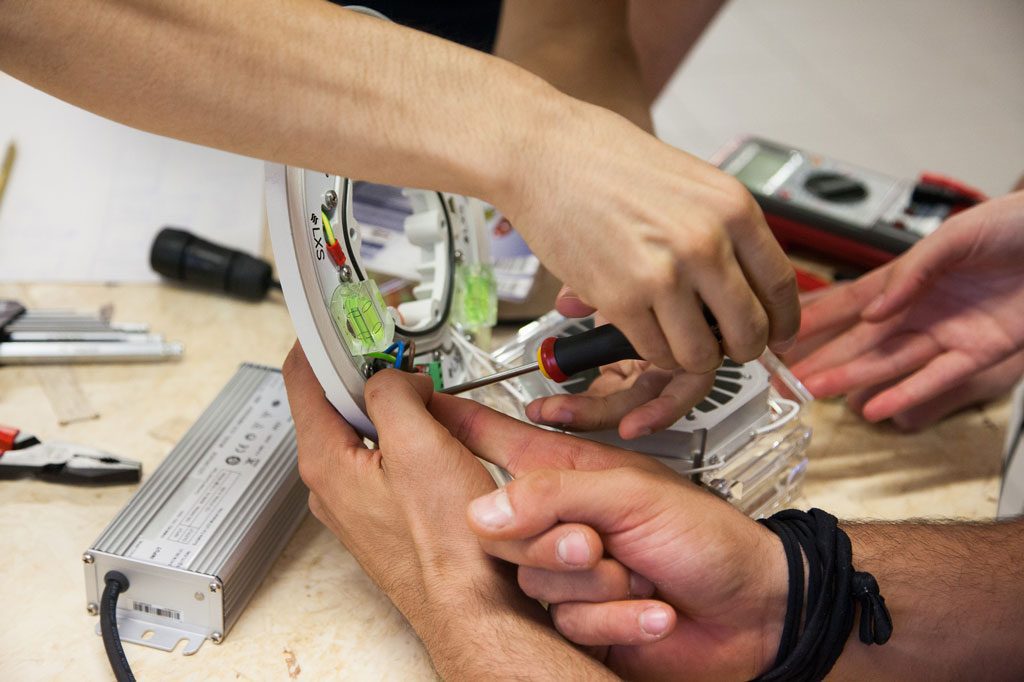
All these design actions were made possible thanks to digital fabrication technologies that enabled a quick & dirty prototyping process: allowing researchers to anticipate the results and effects of the solution from the earliest stages, but also making boundary objects, models and tangible experiments and small prototypes: all tools used during the co-design sessions to generate ideas, opinions and new questions, which proved to be extremely effective, especially when children took part in the process.
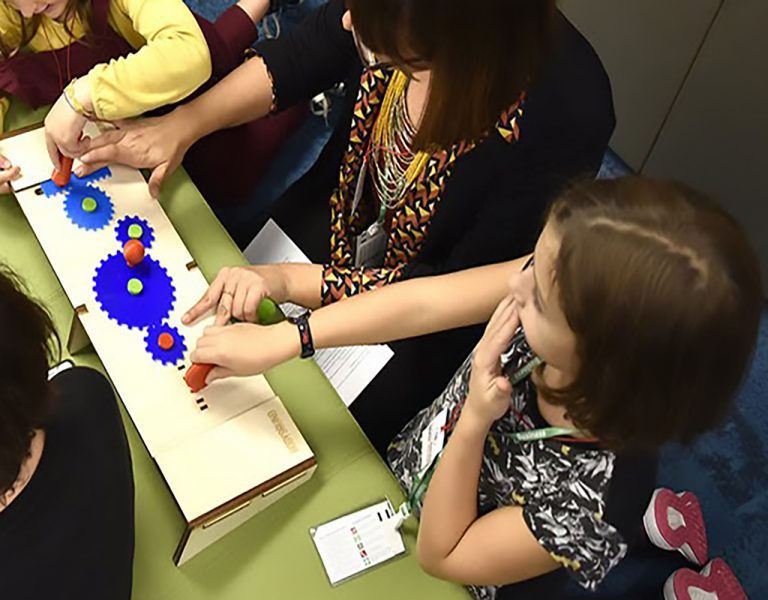
Meet and Code workshop in cooperation with FighTheStroke association
Photo credits: Polifactory
Some of the parents were actively involved, through co-design workshops, in the definition of the challenge and the development of the solution, as well as, together with the Policy Makers and therapists, in a service definition workshop related to “BODYSOUND”.
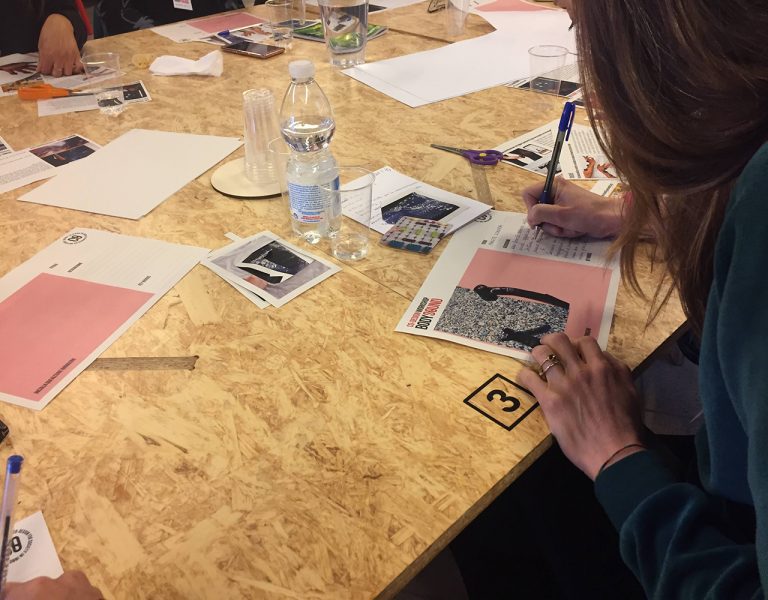
Co-creation workshop with parents from FightTheStroke Association
Photo credits: Polifactory
On the other hand, the therapists (occupational, physiotherapists, sports scientists) played a fundamental role in the correct development of the prototype and during the first test phases, as well as actively contributing to the generation of motor reactivation exercises that became part of the system in its ‘beta’ version. In fact, the designers chose to develop the software in parts, to be able to release several versions ready to be tested, even if they were incomplete, and to proceed with the development based on the feedback received during the tests that followed throughout the development and involved not only therapists but also children and families from the FightTheStroke association.
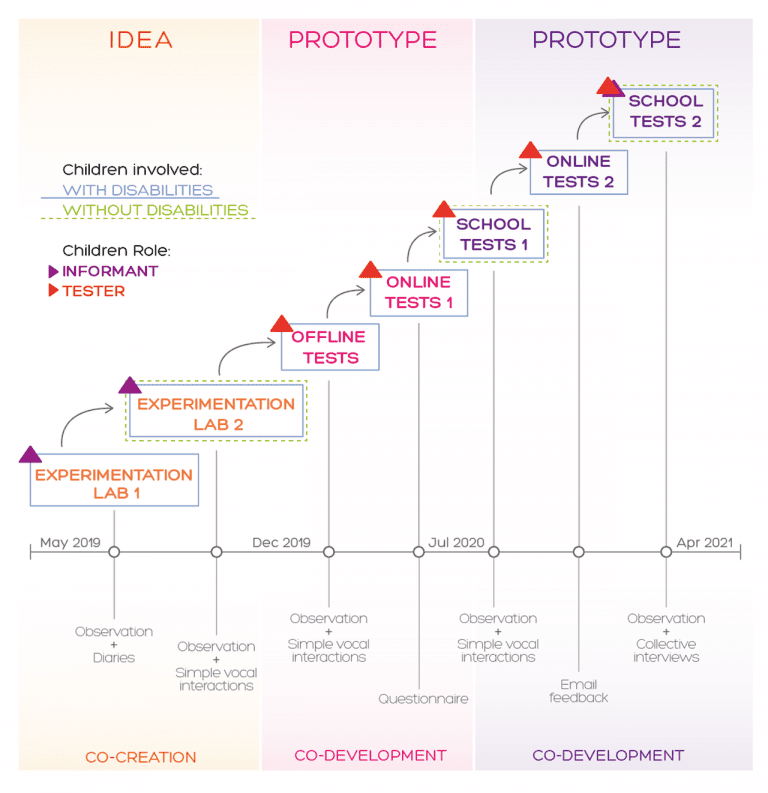
Steps of involving children in the Bodysound co-creation process
Image credits: Polifactory
In the final phase, on the other hand, the involvement of around 90 school-age and preschool children who tested the solution at different stages of development was crucial.